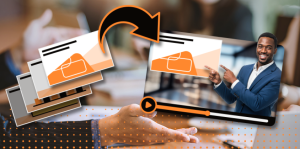
What makes an explainer video effective in 2026?
Written by Tim Moss | 30th January 2026

Table of Contents
Key Takeaways
- Clarity beats complexity: Effective explainer videos in 2026 focus on one clear message, delivered through a simple, audience-first narrative. Less content creates more impact.
- Story structure drives retention: A clear flow from problem to solution keeps attention high and makes complex ideas easier to understand and remember.
- Visuals must explain, not decorate: The strongest explainer videos use visuals to actively support comprehension—guiding attention, simplifying concepts, and reducing cognitive load.
- AI enables scale without sacrificing quality: AI-powered scripting, storyboarding, and localization make it possible to produce and adapt explainer videos faster, consistently, and at scale—while maintaining clarity and effectiveness.

Why Explainer Videos Matter More Than Ever
Explainer videos matter more than ever because of the digital world that we find ourselves in today! Remote work, digital marketing, and self-guided learning, plus shrinking attention spans and increased digital noise all make short explainer videos totally indispensable – they are the most effective way to communicate ideas quickly and memorably.
Explainer videos, for business use or other, simplify complex ideas. By combining visuals, storytelling, and sound, they improve understanding and retention while scaling easily to deliver consistent messages with less time and effort.
Audiences today expect information to be fast, clear, and engaging – that is why explainer videos matter more than ever. The best explainer videos focus on a single clear message, delivered through concise storytelling and strong visual structure.
The Biggest Problem with Most Business Videos
Business videos often focus too much on the company and not enough on the audience. They are overloaded with features, jargon, and internal priorities, assuming viewers will invest time and effort to figure out why these matter. You may wonder why this is a problem? Because the core message gets lost in an unnecessarily long video; viewer attention drops quickly; ultimately the video fails to drive action. It can also become problematic if the video feels generic and overly promotional. Without a sharp narrative, clear purpose, and audience-first approach, even well-produced business videos struggle to deliver real impact. Short videos, aimed at a very specific target group, that address real problems or answer clear questions would be far more effective.

The Core Elements of an Effective Explainer Video
So, what really makes an explainer video effective? The core elements of an effective explainer video are:
1) A clear narrative structure that guides the viewer smoothly from problem to solution
2) A policy of one message per video
3) Visuals that support understanding.
Together, these three elements ensure an explainer video is not just engaging, but genuinely effective at communicating its intended message.
A Clear Narrative Structure
A clear narrative structure helps viewers quickly understand where they are in the story and why it matters to them. Effective explainer videos usually follow a simple flow: they introduce a relatable problem, present the solution, explain how it works, and end with a clear outcome or action. This structure guides the viewer smoothly from problem to solution. It reduces confusion, keeps attention focused, and makes even complex ideas feel logical and approachable. When the story flows naturally, viewers are far more likely to stay engaged from start to finish.
One Message per Video
Equally important is the principle of one message per video. Trying to explain too much at once overwhelms the audience and dilutes impact, but a single focused idea makes the content easier to understand and remember. One message per video ensures clarity and impact. Contrastingly, when multiple ideas compete for attention, the audience often remembers none of them. It is simple: a single, well-defined message allows the video to stay concise, purposeful, and easy to recall. This approach is especially important for business audiences, who value efficiency and clear takeaways. If more information is needed, it’s better delivered through a series of short videos rather than one overloaded explainer.
Visuals That Support Understanding
Finally, visuals that support understanding are critical. Every animation, graphic, or on-screen element should clarify the message, not distract from it. Visuals are used to clarify the message, not decorate it. Effective explainer videos use motion, icons, text, and illustrations to reinforce what’s being said, helping viewers process information faster. The magic of well-designed visuals is that they can simplify abstract concepts, highlight key points, and guide attention where it matters most. When visuals work in harmony with voiceover and story, they reduce cognitive effort and significantly improve comprehension and retention.
How AI Is Changing Explainer Video Production
Finally, visuals that support We all know that AI does not stand for Accelerated Impact, but it might just as well. AI helps people get more work done, faster! For example, AI-supported scripting and storyboarding help teams achieve clearer messaging with better structure. In addition, AI effortlessly helps scaling explainer videos, to deliver multiple versions efficiently. Yes, AI is completely transforming explainer video production by making the process faster, smarter, and more scalable without sacrificing quality.
AI-Supported Scripting and Storyboarding
AI-supported scripting and storyboarding tools help teams move from idea to structure much faster. By analysing inputs like audience type and key objectives, AI can suggest clear messaging, logical narrative flow, and concise scripts that reduce unnecessary complexity. By analysing audience intent and suggesting clearer language, AI can generate structured story flows that align with specific business goals. It can also generate early storyboards or visual outlines allowing stakeholders to align on structure and pacing before production begins. This speeds up decision-making and minimizes revisions later in the process.
Scaling Explainer Videos Without Losing Quality
AI makes it easier to scale explainer videos while maintaining consistency without losing quality. Automation supports tasks like resizing for platforms, updating on-screen text, swapping voiceovers, and localizing content for different regions. Yes, AI makes it possible for brands to adapt a single core video into multiple formats or languages while maintaining visual consistency and message clarity! Instead of recreating videos from scratch, teams can efficiently produce multiple versions from a single master, ensuring brand consistency, visual quality, and message clarity. This makes high-quality explainer videos more accessible than ever!

When Explainer Videos Work Best
But why use explainer videos in the first place? They are best for communicating a message quickly, clearly, and consistently to a specific audience. They are especially effective for product launches, where complex features or new workflows must be understood in a short amount of time. In marketing and sales, explainer videos help articulate value propositions, differentiate offerings, and improve conversion by answering key questions upfront. That is not all: internally, they are powerful tools for onboarding, internal communications, and learning and development. Explainer videos make policies, processes, and training more engaging and easier to retain. Explainer videos are also ideal for change management, software adoption, and customer education, where clarity reduces friction and support requests. The possibilities are endless! Whenever an organization needs to simplify complexity, align understanding across teams, or scale communication without losing clarity, explainer videos deliver the greatest impact.
What Makes an Explainer Video Effective in 2026
That brings us to today. Right now, whether it is for marketing purposes, internal communication, learning and development, or product teams, an effective explainer video is defined by clarity, focus, and relevance. In 2026, with audiences overwhelmed by information, the most successful videos deliver one clear message through a concise, audience-first narrative.
- For marketing, effectiveness means quickly communicating value and driving action.
- In internal communication, it is about alignment, transparency, and consistency across distributed teams.
- Learning and development teams rely on explainer videos that simplify learning, improve retention, and support self-paced training.
- For product teams, effective explainer videos translate complex features into clear benefits and use cases.
In 2026, across all functions, explainer videos are not just engaging, but genuinely useful and impactful when strong storytelling, clear visuals, personalization, and platform-specific formats work together to deliver real value and impact.
Conclusion
Creating an effective explainer video in 2026 requires a thoughtful balance of clarity, strategy, and audience focus. As expectations rise across marketing, internal communication, learning & development, and product teams, following proven explainer video best practices (such as clear messaging, strong narrative structure, and supportive visuals) is no longer optional. The most successful business explainer videos are those that respect the viewer’s time, simplify complexity, and deliver real value, whether the goal is to inform, train, align, or convert. By prioritizing usefulness over promotion, and design over distraction, organizations can ensure their explainer videos remain a powerful communication tool in an increasingly crowded digital landscape.
Creating an effective explainer video in 2026 Ready to turn complex ideas into clear explainer videos? Discover how simpleshow helps teams communicate with clarity, structure, and impact.

Frequently Asked Questions (FAQ)
An explainer video is effective when it focuses on one clear message, follows a simple narrative structure,
and uses visuals that support understanding. Audience relevance, concise storytelling, and purposeful design
are key explainer video best practices in 2026.
Most effective explainer videos are between 60 and 120 seconds. This length is ideal for holding attention
while clearly communicating a single idea without overwhelming the viewer.
Explainer videos work best when you need to simplify complex information, introduce products, support
marketing and sales, train employees, communicate internally, or drive software adoption at scale.
Yes — more than ever. With increased digital communication and AI-supported production, business explainer
videos remain one of the most effective ways to educate, align, and engage audiences.